Dental Burs
Engineered and Tested From Macro to Nano-Scale
Why Dimensional Accuracy?
The alignment of a dental bur is crucial for its performance during dental procedures. When a bur is not properly aligned, it can lead to a range of issues that affect the precision and effectiveness of dental work. Misalignment can cause uneven cutting or grinding, leading to inaccuracies in tooth shaping or material removal. Moreover, it can result in excessive vibration, discomfort for the patient, and gradual hand vibration syndrome. Proper alignment ensures that the bur operates smoothly and efficiently, allowing dentists to achieve the desired results with precision and accuracy. Additionally, precise alignment reduces the risk of bur slippage or dislodgement during use, enhancing both safety and effectiveness in dental procedures.
What do we do for you?
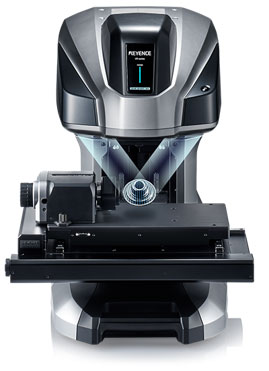
A Keyence 3D Optical Profilometer is employed, which performs noncontact imaging, recording detailed surface information with high precision down to 0.1 µm. This method allows for measuring features that traditional probe-type instruments can’t capture. The images are then exported to Solidworks for the measurements of the diameters and the alignment.
Why Micro Morphology?
The morphology diamond coated to the burs, to be more precise the density and shape of particles, play the most important role, when it comes to cutting performance.
What do we do for you?
The density and shape of diamond particles are engineered to deliver the best performance. To this end, Scanning Electron Microscopy (SEM) is leveraged to explore the texture of produced dental burs.

Why Cutting Performance?
One of the dominant loads dental burs undergo during their service is bending. As such, brittle materials shall not be used for the shank for the safety of patients. Despite a better wear resistance of tungsten carbide, steel is selected as the shank material to ensure a ductile behavior. Dental burs experience corrosion during the sterilization process. The corrosion is exacerbated by the conditions in the oral cavity. To be more specific, stainless steel which has a better corrosion resistance is chosen as our shank material.
What do we do for you?
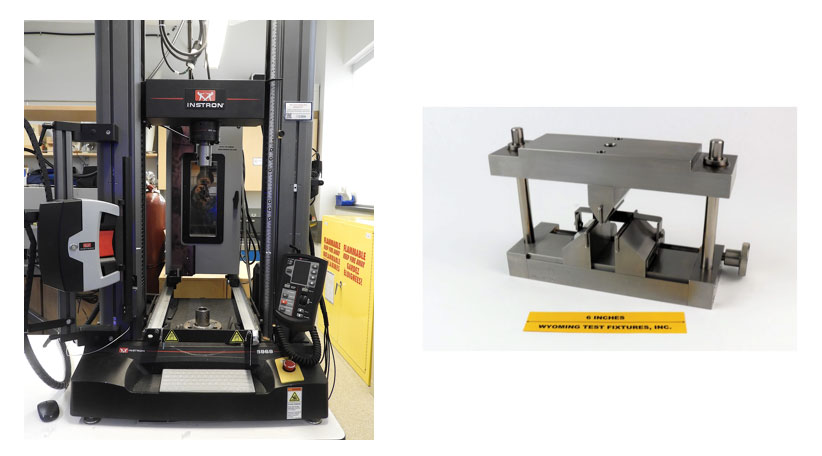
Dental burs are tested per ASTM E290-22 using an Instron Machine. The three-point bending test offers valuable insight into the flexural behavior of our dental burs, securing the safety of patients during dental procedures.
Why Wear Resistance and Cutting Performance?
Wear resistance implies the durability of dental burs. Theoretically, greater hardness leads to extended service life. The performance of dental burs, however, is not limited to this factor. When it comes to dental burs, the strength of the bond of diamond particles to the shank plays a key role. The wear resistance shall be optimized, while the cutting performance is not sacrificed.
What do we do for you?
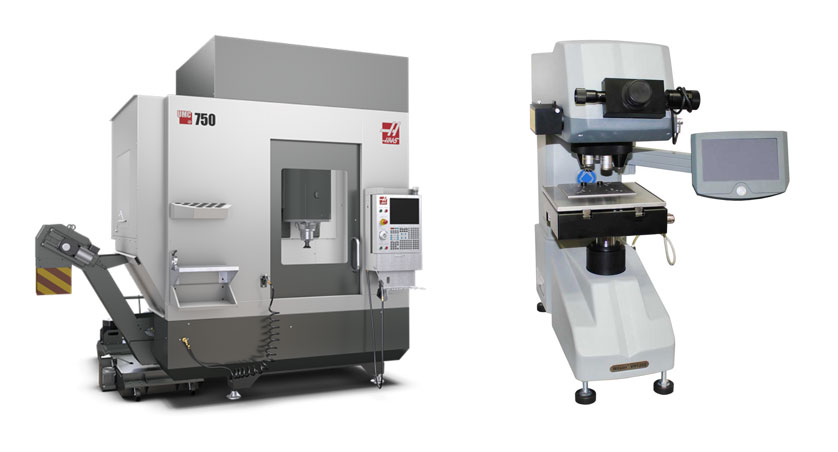
The cutting performance tests are executed employing an advanced HAAS Automation UMC 750 CNC Machine. The substrate used for this test is Macor®, which is a machinable ceramic material introduced by Corning Glass Company, New
York, NY). This material also closely duplicates the consistency and crystalline structure of natural tooth structure.
Moreover, putting a Wilson VH1102 Micro Hardness Tester into practice, micro hardness testing procedure is conducted in accordance with international standards ISO 6507 and ASTM E384, specifically designed for Vickers hardness testing.